
As production processes become more complex, companies must ensure that every step, from raw material handling to final delivery, is accurately recorded and controlled. However, traditional tracking methods such as manual records or barcode scanning often fail to meet these demands.
Against this background, RFID technology in pharmaceutical manufacturing has emerged as a reliable solution. By enabling automatic data capture and real-time tracking, RFID helps manufacturers improve visibility, reduce errors, and strengthen compliance across the entire production process.
Before implementing new technologies, it is important to understand the limitations of existing systems. In pharmaceutical environments, managing liquid containers such as drug barrels or solution tanks presents several common challenges.
First of all, many facilities lack real-time visibility. Without continuous tracking, it is difficult to know the exact location or status of each container during production. This often leads to delays or confusion.
In addition, human errors are a major concern. Manual data entry or barcode scanning depends heavily on operators, increasing the risk of incorrect or missing data. Over time, barcode labels may also become damaged or unreadable.
Another issue is inefficient data collection. Traditional methods cannot keep up with fast-moving production lines, resulting in outdated or incomplete information.
Finally, pharmaceutical companies face strict compliance and traceability requirements. Regulations such as GMP require full lifecycle tracking, and any data gaps may create risks during audits or product recalls. These challenges highlight the need for a more advanced RFID traceability system.
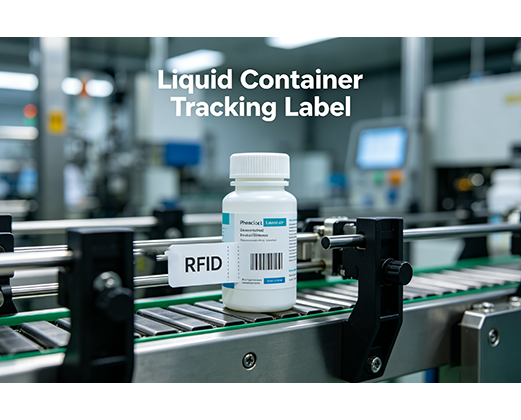
To address these issues, RFID provides a practical and scalable solution. RFID, or Radio Frequency Identification, uses radio waves to identify and track tagged objects automatically. A typical RFID tracking system includes RFID tags, readers, and a software platform.
Unlike barcode systems, RFID does not require direct line-of-sight scanning. This makes it especially suitable for conveyor-based production environments where items move continuously.
Moreover, RFID supports non-contact and batch reading, allowing multiple containers to be identified at the same time. As a result, it integrates seamlessly with automated production lines and supports higher operational efficiency.
When applied to pharmaceutical conveyor systems, RFID enables a structured and automated tracking process.
To begin with, each liquid container is equipped with an RFID tag that stores key information such as batch number, production time, and specifications. This creates a unique digital identity for every container.
Next, at the entry point of the conveyor, RFID readers automatically capture tag data and register the container into the system. This eliminates the need for manual input and ensures accurate initial records.
As the containers move along the conveyor, multiple RFID readers installed at different points continuously update their location and process status. This creates a real-time tracking map, allowing managers to monitor the entire production flow.
At critical stages, such as quality inspection points, additional data can be written to the RFID tag. If any abnormal values are detected, the system can trigger alerts, helping operators take immediate action.
Finally, once the container completes its journey, all data collected throughout the process forms a complete digital record. This enables full RFID traceability and supports fast and accurate product tracking when needed.
With these capabilities in place, RFID brings several measurable benefits to pharmaceutical manufacturing.
First, it significantly improves operational efficiency. Since RFID allows automatic and high-speed data capture, production lines can run without interruption. There is no need to stop for scanning, which increases throughput.
Second, RFID ensures high data accuracy. By reducing manual intervention, the system minimizes errors and provides reliable data for decision-making.
Third, RFID enhances compliance and traceability. Every container’s movement and status are recorded, making it easier to meet regulatory requirements and perform audits.
In addition, RFID improves process control. Managers can monitor each stage of production in real time, identify bottlenecks, and optimize workflows more effectively. These advantages make RFID an essential tool in modern pharmaceutical operations.
Beyond standalone applications, RFID can also be integrated with broader digital systems. For example, RFID data can be connected with MES, ERP, or warehouse management systems.
Through this integration, manufacturers can achieve better coordination between production, inventory, and logistics. Real-time data supports faster decision-making and helps build a more responsive and flexible production environment.
As part of Industry 4.0, RFID plays a key role in enabling smart factories by providing accurate and continuous data flow across systems.
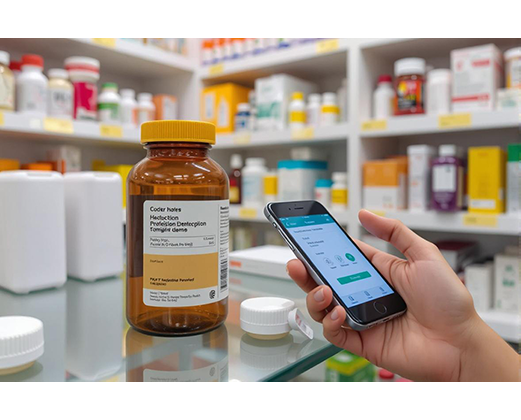
While RFID offers many advantages, successful implementation requires careful planning.
First, selecting the right RFID tags is critical. In pharmaceutical environments, tags must be resistant to liquids, chemicals, or temperature changes.
Second, reader placement must be optimized to ensure stable and accurate data capture along the conveyor.
In addition, system compatibility should be considered. The RFID solution should integrate smoothly with existing software platforms.
Finally, data security and access control are important. Proper system design ensures that sensitive production data is protected while remaining accessible to authorized users.
In summary, RFID technology provides a powerful solution for improving liquid container tracking in pharmaceutical manufacturing. By enabling real-time tracking, automated data collection, and full lifecycle traceability, RFID helps companies overcome the limitations of traditional systems.
As a result, manufacturers can achieve higher efficiency, better accuracy, and stronger compliance. In an industry where precision is critical, RFID is becoming an essential part of modern production systems.
If your company is looking to improve RFID asset tracking, production visibility, or compliance management, SZD Technology offers professional RFID solutions tailored to pharmaceutical environments. Our team can help you design and implement a reliable RFID tracking system that supports smarter and more efficient operations.
Contact ZD Technology today to learn how RFID can optimize your production processes and enhance traceability across your facility.
Do you need a professional team to provide you with solutions? Contact us for a quote
Let us discuss it with you.


 Tel: +86-755-23080267
 Email: sales1@zd-technology.com
Add: A316,building A, Huayuan Technology And Innovation Park, Baoyuan Road
Copyright © 2024 Shenzhen ZD Technology Co., Ltd., All rights reserved.
Designed by 

