
An RFID silicone wristband combines a flexible silicone body with an embedded RFID or NFC chip for contactless identification and data exchange. Its wearable design makes it suitable for applications where visitors, employees, or event attendees need convenient access credentials.
For procurement teams, selecting the right wristband requires more than evaluating the silicone material. Reader compatibility, chip technology, environmental conditions, and customization requirements should all be considered before production.
The first step is to confirm the frequency and chip technology supported by the existing RFID reader system. RFID silicone wristbands can be designed for different frequency technologies, so the wristband must be compatible with the infrastructure already in use.
Available options include 125 kHz and 13.56 MHz configurations. The RFID silicone wristband supports different chip configurations for specific applications.

If a project uses an existing RFID reader, confirm its operating frequency and supported chip type before selecting the wristband. A wristband using a different frequency may not communicate with the reader.
The chip determines how the wristband communicates with the reader and which functions it can support.
Available options include TK4100, EM4200, T5577, MIFARE® Classic® 1K/4K, NTAG® 213, NTAG® 215, and NTAG® 216. The appropriate choice depends on reader compatibility, application requirements, and data functions.
For NFC applications, NTAG® chips can support interactions with compatible NFC enabled smartphones and readers. For projects requiring more advanced security and multi application management, MIFARE® DESFire may be suitable, depending on the system requirements.
After confirming reader compatibility and chip requirements, test the complete wristband configuration before bulk production.
Testing should verify that the intended reader can detect the wristband and perform the required operation. For writable chips, encoding and data verification should also be checked.
Testing the actual wristband with the intended reader and software helps identify compatibility issues before large quantities are produced.
The ZD-02 RFID silicone wristband is made from 100% silicone and is described by the manufacturer as waterproof and sweatproof, with an IP68 rating. These properties make it suitable for environments where wristbands may be exposed to water or sweat, including water parks, gyms, and outdoor events.
For applications involving frequent water exposure, confirm that the selected wristband's protection rating meets the actual operating requirements.
The ZD-02 RFID silicone wristband is specified for temperatures from −30°C to +150°C and is described as suitable for repeated washing. The manufacturer also states that it can withstand high temperature sterilization.
However, the specified temperature range should not automatically be interpreted as a guarantee of continuous operation under every temperature condition. For applications involving high temperature sterilization or specific cleaning procedures, confirm the applicable conditions with the supplier before purchase.
A wearable RFID product should remain comfortable throughout its intended use. Silicone is soft and elastic, and multiple size options are available for different wearing requirements.
The closure should also match the application. A wristband for a short event may have different requirements from one intended for long term membership or facility access.
RFID silicone wristbands can serve as wearable credentials for access control. Employees, authorized personnel, or registered visitors can present a wristband to a compatible RFID reader to verify their access rights.
For access control projects, the chip should be selected according to reader compatibility and the required security level. The access control system must also support the selected chip technology.
RFID silicone wristbands can be used for event passes, visitor identification, ticketing, and membership management.
The wearable format allows event attendees and visitors to carry identification credentials without a separate card or ticket. This is useful for events, water parks, gyms, and other facilities where convenient identification is important.
Silicone wristbands can support cashless payment when the selected chip is compatible with the payment system and the required application has been properly configured.
For projects combining payment with access control or membership functions, procurement teams should confirm the chip's memory capacity, security features, reader compatibility, and backend integration requirements before production.
For applications requiring advanced security and multi application management, the MIFARE® DESFire EV3 16K Silicone Wristband uses an NXP MIFARE® DESFire EV3 16K chip, provides 16 KB of memory, and supports 13.56 MHz contactless communication. Its suitability for a specific payment system should be verified with the system provider.
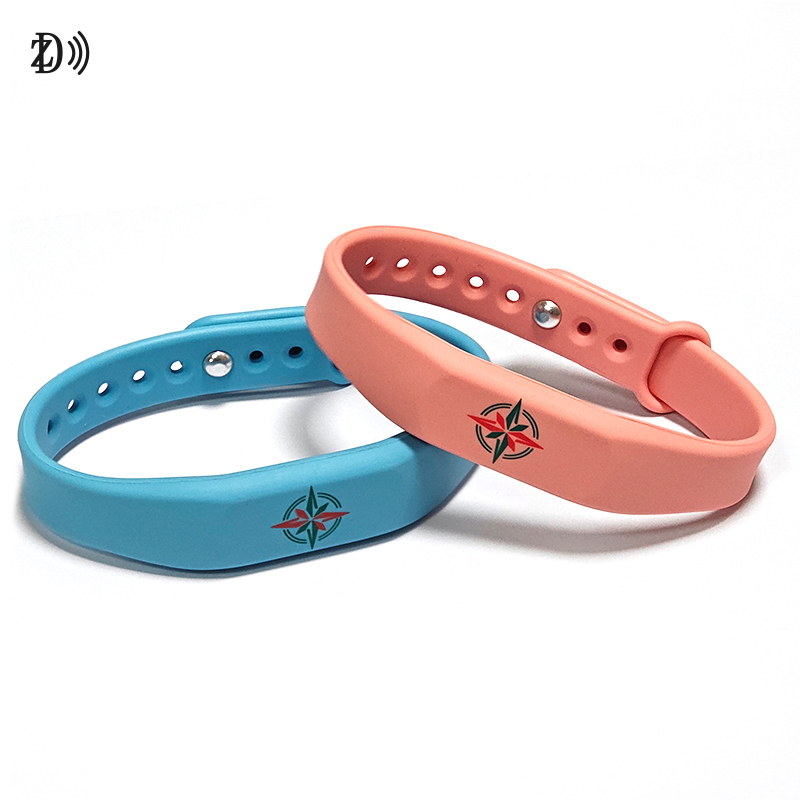
Wristband size should match the target wearers and the conditions in which the wristbands will be used. Different age groups and wearing requirements may call for different dimensions, while adjustable closures can provide greater flexibility for applications involving various wrist sizes.
Multiple sizes and custom sizing options are available for silicone wristband projects.
Customization can include logo printing, laser engraving, embossing, debossing, and other marking methods, depending on the selected product.
Color can also be customized, including standard colors and Pantone matched options.
The logo method should be selected according to the required appearance, application conditions, and production requirements.
Encoding requirements should be finalized before mass production. The supplier needs to know what data will be encoded, whether each wristband requires a unique identifier, and whether individual data personalization is necessary.
For suitable models, options such as UID and data encoding are available. Confirming these requirements in advance helps ensure that the finished wristbands can integrate with the intended reader and software system.
No. The wristband must use a frequency and chip technology supported by the reader system. Confirm the reader specifications before selecting a wristband.
NTAG® 213, NTAG® 215, and NTAG® 216 are available options for NFC applications. MIFARE® Classic® and MIFARE® DESFire may also be considered when their features match the application's data, security, and system requirements.
Yes. Depending on the selected model, customization can include size, color, logo, surface finish, UID, and data encoding. Confirm the available marking methods and encoding options with the supplier before production.
Choosing an RFID silicone wristband starts with reader compatibility and chip requirements. Environmental conditions, application needs, wearing comfort, and customization options should then guide the final selection.
For chip selection, encoding, or customization requirements, contact us to discuss a suitable RFID silicone wristband configuration.
Do you need a professional team to provide you with solutions? Contact us for a quote
Let us discuss it with you.


 Tel: +86-755-23080267
 Email: sales1@zd-technology.com

Add: A316,building A, Huayuan Technology And Innovation Park, Baoyuan Road
Copyright © 2024 Shenzhen ZD Technology Co., Ltd., All rights reserved.
Designed by 

