
As industries accelerate toward digitalization, Industry 4.0, and full traceability, RFID (Radio Frequency Identification) has become a core enabling technology.
RFID labels allow businesses to identify, track, and manage assets automatically, replacing manual processes with real-time data visibility.
In this guide, we explain what RFID labels are, how they work, their structure, and their most important applications across industries.
RFID labels are smart identification devices that use radio frequency signals to store and transmit data wirelessly.
Each label contains a unique identifier, enabling objects to be tracked throughout their lifecycle—from production to distribution and final use.
Unlike barcodes, RFID labels do not require line-of-sight scanning, allowing faster and more automated data capture.
A complete RFID system includes:
RFID Labels (Tags): Attached to items for identification
RFID Readers: Capture and process tag data
Antennas: Enable communication between tags and readers
Software Platform: Manages, analyzes, and integrates data
Together, these components create a real-time traceability system.
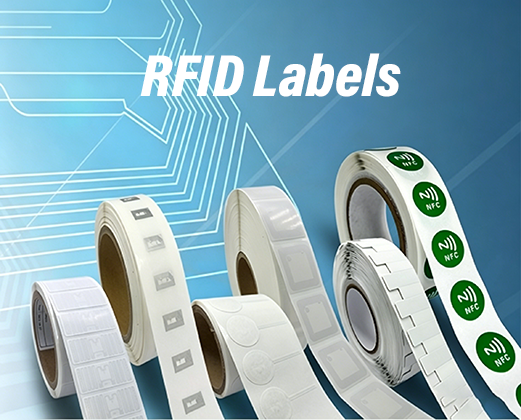
An RFID label is made up of three essential elements:
· Stores data
· Processes signals
· Determines tag functionality
· Sends and receives radio signals
· Determines frequency and read range
· Typically made of aluminum or copper
· Supports the chip and antenna
· Provides durability (paper, PET, PVC, etc.)
· Enables adhesion to different surfaces
RFID labels are designed for different environments and applications. Choosing the right type ensures optimal performance and durability.
General-purpose labels with flexible customization.
Used in logistics, retail, and industrial tracking.
Built for harsh environments with resistance to heat, chemicals, and moisture.
Common in industrial and automotive applications.
Lightweight and moisture-resistant, designed for accurate time tracking.
Used in sports events such as marathons and races.
Specially designed for metal surfaces to avoid signal interference.
Used in manufacturing, aviation, and asset tracking.
Cost-effective and customizable for item-level tracking.
Widely used in apparel, footwear, and consumer goods.
Durable and weather-resistant for vehicle identification.
Used in parking systems, tolling, and fleet management.
Flexible and resistant to repeated washing conditions.
Used in hotels, hospitals, and textile management.
Designed to withstand chemicals and extreme temperatures.
Used for sample tracking and pharmaceutical applications.
“RFID tag” is a general term for any RFID device.
RFID labels: Flexible, adhesive, used for packaging and products
Hard tags: Rigid, durable, used in industrial environments
All RFID labels are tags, but not all tags are labels.
Automatic identification without manual scanning
Real-time tracking and visibility
High data accuracy
Scalable for large operations
Supports full supply chain traceability
RFID labels enable:
Real-time inventory tracking
Faster warehouse operations
Automated receiving and shipping
Result: 20–30% efficiency improvement vs barcode systems
Used for:
Production tracking
Work-in-progress monitoring
Quality control
RFID helps reduce manual labor and improve production accuracy.
RFID labels support:
Smart inventory management
Anti-theft systems
Omnichannel fulfillment
They also enable enhanced customer experiences through smart fitting rooms.
Applications include:
Patient identification
Medication tracking
Asset management
RFID improves safety, accuracy, and compliance.
Track:
Equipment
Tools
Returnable containers
Prevent loss and improve utilization.
RFID enables:
Real-time stock visibility
Automated counting
Reduced discrepancies
RFID labels and wearables are used for:
Event entry management
Staff access control
Secure facility entry
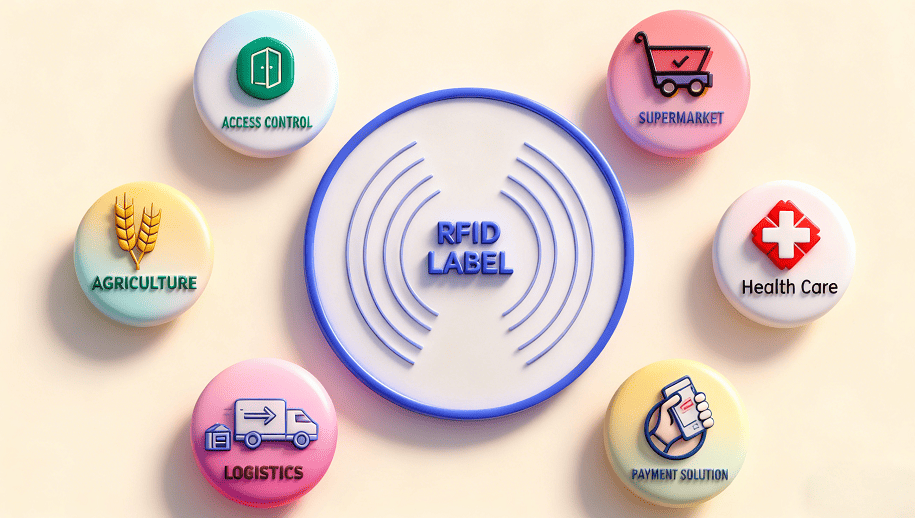
Different industries require different label designs:
· On-metal RFID labels → for metal surfaces
· On-liquid RFID labels → for liquid containers
· Rugged RFID labels → for harsh environments
· Textile RFID labels → for laundry and garments
Choosing the right label ensures optimal performance and durability.
RFID labels are produced using specialized printers that:
· Print visual information (text, barcode, branding)
· Encode digital data into the RFID chip
Printer types include:
· Industrial printers (high volume)
· Desktop printers (medium volume)
· Portable printers (field operations)
RFID label lifespan depends on:
· Environment (temperature, chemicals, moisture)
· Material quality
· Usage conditions
Common failure factors include:
· Antenna damage
· Chip connection issues
· Environmental degradation
High-quality RFID labels undergo aging and durability testing to ensure long-term performance.
Pricing depends on:
· Chip type and memory
· Label material
· Size and design
· Order volume
· Special features (on-metal, high-temp, etc.)
Typical cost ranges from a few cents to higher-value industrial tags.
RFID labels are a foundational technology for traceability, automation, and digital transformation.
By enabling real-time tracking and accurate data capture, they help businesses improve efficiency, reduce costs, and gain full visibility across operations.
Choosing the right RFID label—based on application, environment, and performance requirements—is critical to maximizing system value.
As a professional RFID solution provider, we help businesses:
· Select the right RFID labels
· Customize materials and chip types
· Integrate RFID into existing systems
Contact us today to get expert guidance and tailored RFID solutions for your project.
Do you need a professional team to provide you with solutions? Contact us for a quote
Let us discuss it with you.


 Tel: +86-755-23080267
 Email: sales1@zd-technology.com
Add: A316,building A, Huayuan Technology And Innovation Park, Baoyuan Road
Copyright © 2024 Shenzhen ZD Technology Co., Ltd., All rights reserved.
Designed by 

