
Swapping traditional magnetic stripes for contactless card systems makes checkouts faster and saves card readers from physical wear and tear. However, buying contactless stored value cards takes more than picking a design. Getting the chip specs or antenna layout wrong leads to reading errors, frustrated shoppers, and unexpected card replacement costs.
Gift cards are prepaid payment tools issued by stores, brands, or financial institutions. Customers load money onto the card, which then functions as a convenient cash alternative across participating stores. Integrating these cards into your retail setup requires a clear understanding of chip performance, material selection, and RFID/NFC Reader compatibility.
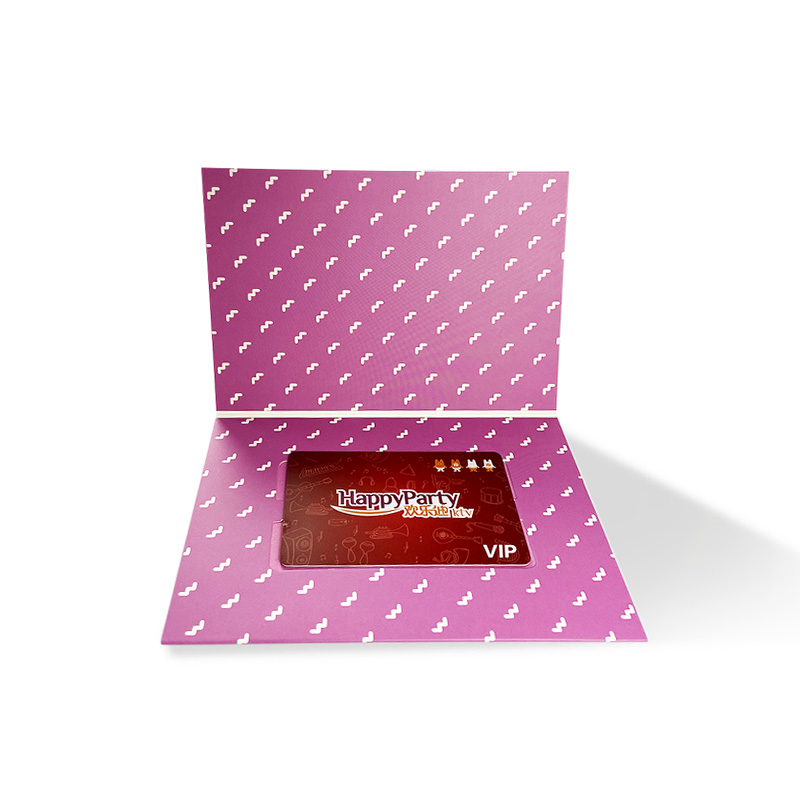
Card purchasing decisions start with selecting the right frequency for your hardware setup.
Low Frequency 125 kHz: Transmits basic signals with slow data transfer speeds. These chips carry fixed serial numbers without encryption, making them suitable for basic entry badges rather than dynamic account balances.
High Frequency 13.56 MHz: Supports fast data transfers and cryptographic protection. This frequency serves as the global standard for retail gift networks and smartphone interactions.
Selecting the correct communication protocol determines how cards talk to your checkout hardware.
ISO IEC 14443A: Powers short distance transactions up to 10 cm. Popular chips include MIFARE Classic® 1K for encrypted sector storage and MIFARE Ultralight® for limited balance cards.
ISO IEC 15693: Operates over longer distances up to 1 meter. Stores choose this option when cards double as inventory passes or library tracking items.
Having established these core frequency standards, the next step involves matching chip capabilities directly to your physical checkout equipment.
Aligning internal chip memory with your checkout software prevents integration headaches during store rollouts.
| Feature | Low Frequency 125 kHz | High Frequency 13.56 MHz | Dual Frequency Composite |
|---|---|---|---|
| Operating Range | Up to 5 cm | Up to 10 cm | 5 cm to 10 cm |
| Data Security | Basic or None | Encrypted Key Protection | Mixed Security Levels |
| RFID/NFC Reader Compatibility | Proximity Terminals | NFC and ISO 14443A Units | Multi Protocol Scanners |
| Primary Store Application | Staff Access Badges | Stored Value and Loyalty Cards | Legacy Transition Systems |
Matching card reading modes ensures your store terminals process balances correctly.
Serial Number Scanning: The reader scans the factory programmed card ID and queries a cloud database. Basic ISO 14443A chips work well here because memory size does not matter.
Encrypted Sector Read Write: The terminal writes monetary balances directly onto chip memory blocks. This method requires rewriteable chips and compatible units like Desktop Readers.
Hybrid Formats: Combining an internal chip with a magnetic stripe or a thermal printed barcode ensures backward compatibility with older checkout terminals.
Dual Frequency Setup: Placing low frequency and high frequency antennas inside one card allows seamless operation across security gates and retail registers.
Once chip compatibility with store terminals is confirmed, attention must turn to choosing card materials that withstand daily handling.
Substrate choice dictates card lifespan, print quality, and structural resistance under daily store use.
Standard PVC: Delivers a smooth surface for sharp CMYK printing and smooth lamination over internal antennas at an economical price point.
Heavy Duty PETG: Provides superior physical strength and handles heat up to 80°C without cracking, making it ideal for busy retail settings.
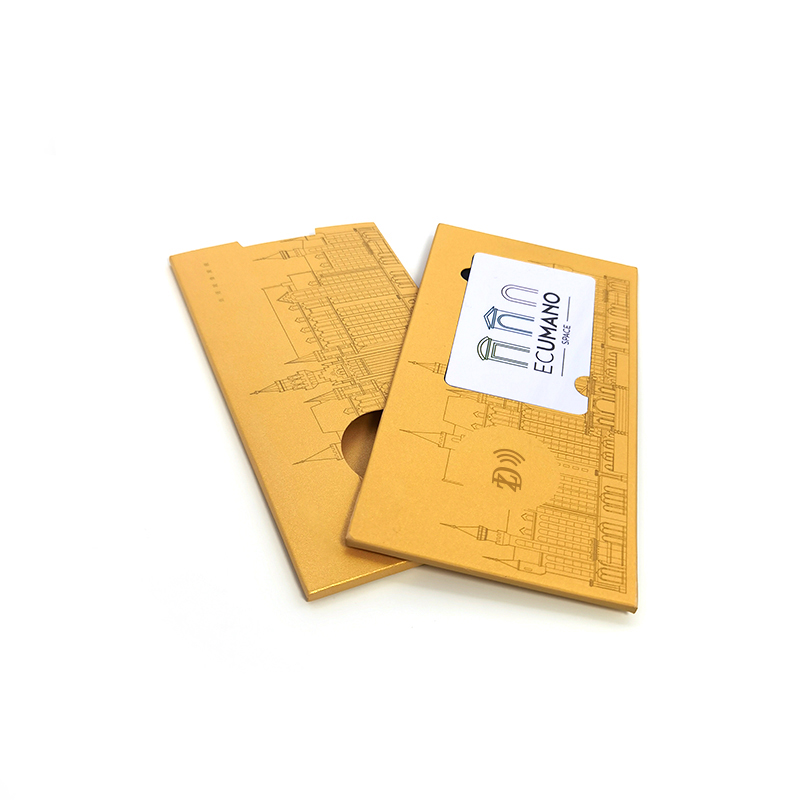
Eco conscious brands can choose greener materials without compromising card performance.
Wooden Substrates: Built using natural wood veneers wrapped around an internal Card Prelam inlay, creating a distinct physical look for premium stores.
Recycled PVC: Uses post consumer plastic waste to deliver identical printing performance and card durability compared to standard PVC options.
Choosing the right material is essential, but proper card construction is equally critical to avoid early manufacturing defects.
Manufacturing mistakes can weaken card signals, trigger internal breaks, or corrupt chip data during store operations.
Metallic Foil Interference: Stamping conductive foil over internal antenna paths creates a shield that blocks reader signals. Card designs must keep a 5 mm clear space around the outer edge.
Lamination Heat and Pressure: Unbalanced pressure profiles during hot press molding can crack internal chip modules or snap copper wire connections.
Testing early samples protects your store from batch wide hardware errors.
Reader Range Checks: Testing sample cards across store terminals confirms proper activation distance before bulk manufacturing begins.
Printer Surface Flatness: Passing cards through on site thermal printers requires smooth card surfaces over the internal chip bump to avoid faint print lines.
With production pitfalls identified, establishing clear quality standards guarantees long term card performance across all store locations.
Factory execution determines card appearance, data accuracy, and final yield during large scale purchasing.
Surface Finishing Options: High volume orders use offset CMYK printing, spot colors, metallic undercoats, signature panels, and laser engraved serial numbers.
Automated Data Matching: Inline factory inspection matches printed variable numbers against internal chip serial arrays before bulk packaging.
Working with experienced production facilities ensures consistent batch quality.
Bending and Torsion Checks: Quality standards require cards to survive 1000 bending cycles without snapping internal antenna wires.
Zero Defect Screening: Non working internal chips are identified and removed at the inlay stage before final plastic lamination.
Operating as a National High technology Enterprise in Shenzhen China, ZD Technology brings over two decades of manufacturing experience to the smart card sector. Founded in 2000, the company handles bulk orders for hundreds of global clients with a 50 percent repurchase rate. Offering a full line of smart cards, tags, and readers, ZD Technology delivers reliable IoT hardware backed by experienced technical support.
Standard production for customized smart cards generally requires two to three weeks after final artwork approval. This timeline covers inlay assembly, sheet printing, hot press lamination, die cutting, and automated data encoding. Expedited production schedules can often be arranged for urgent store rollouts.
Keep unencoded cards in a temperature controlled room between 15°C and 25°C with relative humidity below 60 percent. Excessive heat can warp plastic substrates, while high humidity can damage magnetic stripes or cause laminated surfaces to stick together inside packaging boxes.
Industrial chip memory retains stored data for 10 to 100 years without requiring internal batteries. Under standard storage conditions, internal chip components do not degrade, meaning card lifespan depends on physical plastic wear rather than electronic failure.
Buying reliable RFID Gift Cards requires balancing chip memory protocols, card body materials, and store reader requirements. By selecting compatible hardware formats and keeping foil designs away from internal antenna paths, retailers can eliminate checkout read errors and protect their brand image.
Partnering with an experienced manufacturer ensures consistent batch quality, accurate data encoding, and durable card performance across all retail registers. To discuss technical specifications or request physical card samples for your checkout setup, contact the engineering team at ZD Technology today.
Do you need a professional team to provide you with solutions? Contact us for a quote
Let us discuss it with you.


 Tel: +86-755-23080267
 Email: sales1@zd-technology.com
Add: A316,building A, Huayuan Technology And Innovation Park, Baoyuan Road
Copyright © 2024 Shenzhen ZD Technology Co., Ltd., All rights reserved.
Designed by 

