
As organizations grow, assets become more dispersed, equipment portfolios expand, and operational complexity rises. However, many companies still rely on manual tracking, spreadsheets, or basic barcode systems. As a result, asset loss, inaccurate records, unplanned downtime, and rising maintenance costs have become common challenges. Against this background, RFID asset management is emerging as a proven and practical solution that helps organizations regain control, improve visibility, and operate more efficiently.
To understand the value of RFID, it is important to clarify the roles of asset management and maintenance management. Asset management focuses on tracking and managing physical assets throughout their entire lifecycle—from procurement and deployment to utilization and retirement. Its goal is to maximize asset value while minimizing waste and loss. In contrast, asset maintenance management concentrates on keeping those assets in good working condition through inspections, servicing, and repairs. Although different in focus, both rely heavily on accurate data, which traditional methods often fail to deliver.
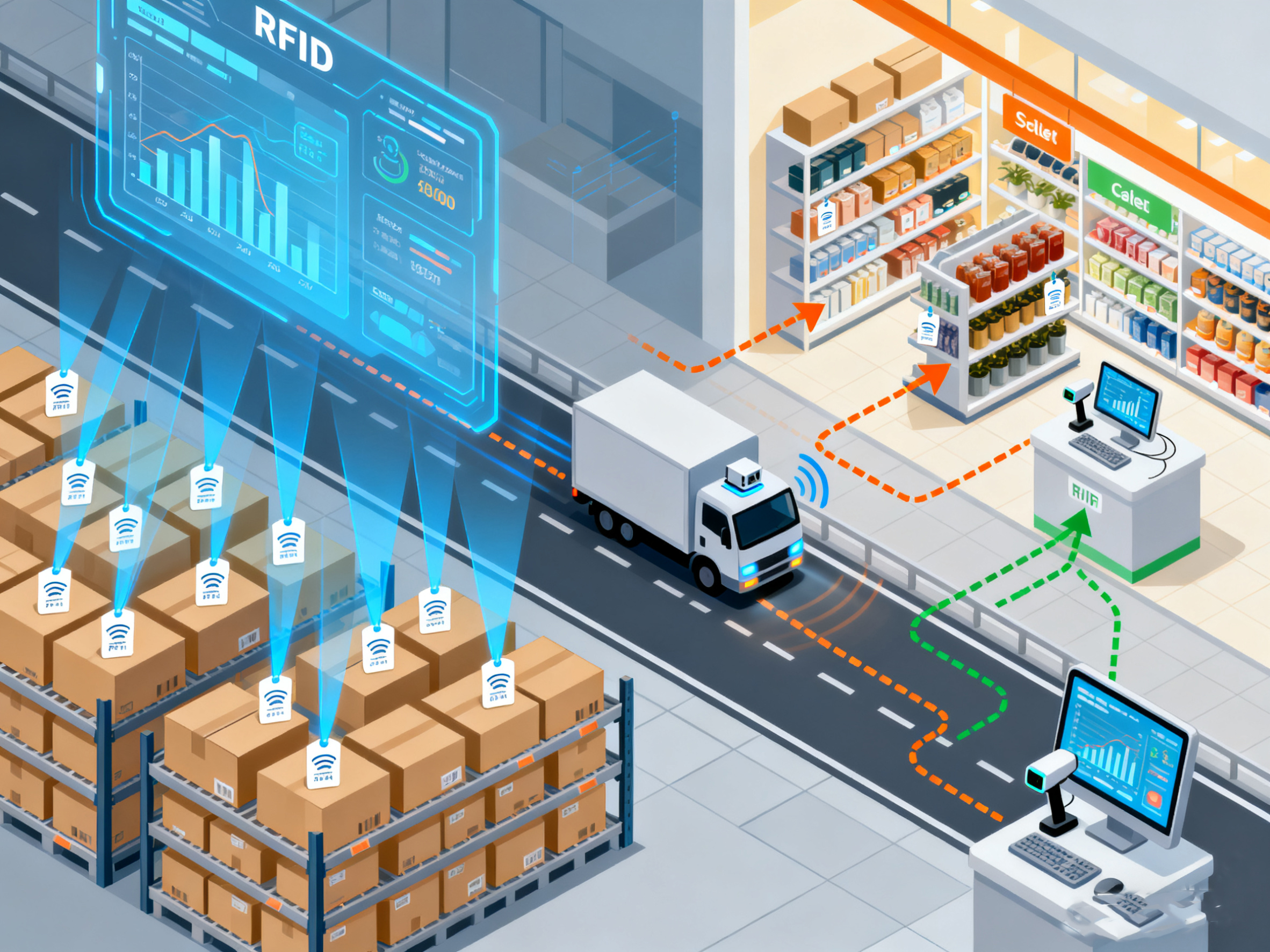
While manual and barcode-based systems have been widely used for decades, they struggle to meet modern operational demands. First, manual data entry is time-consuming and prone to human error, leading to mismatches between physical assets and system records. Second, barcode scanning requires line-of-sight and one-by-one processing, which slows down inventory checks and asset audits. More importantly, traditional methods lack real-time asset visibility. As a result, assets are often misplaced, underutilized, or over-maintained. These limitations clearly highlight the need for more advanced asset tracking solutions.
At this point, RFID technology provides a strong alternative. RFID, or Radio Frequency Identification, uses radio waves to identify and track tagged assets without physical contact. A typical RFID asset tracking system includes RFID tags, RFID readers, antennas, and backend software. Each tag carries a unique ID, allowing assets to be identified automatically when they enter a reader’s range. Unlike barcodes, RFID does not require direct visibility and can read multiple items at the same time, making it ideal for large-scale asset management.
One of the most significant advantages of RFID asset management is real-time and automated asset tracking. With RFID, organizations can continuously monitor asset movement across warehouses, factories, hospitals, or campuses. This reduces the time employees spend searching for equipment and improves daily operational efficiency. In addition, RFID asset tracking greatly reduces asset loss and misplacement. By defining zones and tracking movement, companies can detect unauthorized asset transfers and strengthen asset security. Furthermore, RFID enables fast and accurate inventory counts. Hundreds of tagged assets can be scanned in seconds, improving inventory accuracy and simplifying audits.
Beyond tracking location, RFID also plays a key role in improving maintenance management. By collecting data on asset usage and movement, RFID supports preventive maintenance based on actual conditions rather than fixed schedules. This helps organizations avoid both over-maintenance and unexpected breakdowns. Moreover, RFID data can contribute to predictive maintenance strategies. When combined with maintenance systems, usage patterns and historical records help teams identify potential failures early. As a result, equipment downtime is reduced, asset lifespan is extended, and maintenance costs are better controlled.
Different environments require different RFID tag designs. For industrial and healthcare settings, RFID on-metal tags are widely used because they perform reliably on metal surfaces and in harsh conditions. These tags are suitable for tracking machinery, tools, and medical equipment. Meanwhile, RFID cable tie tags are commonly used for tools, cables, and small assets. Their flexible design allows quick installation without complex mounting. In logistics and fleet management, RFID tire tags support tire lifecycle tracking, enabling organizations to monitor usage, maintenance history, and replacement timing more effectively.
To unlock full value, RFID systems are often integrated with existing enterprise platforms such as ERP, CMMS, or EAM systems. Through system integration, RFID asset data flows automatically into maintenance and management software, creating a single source of truth. This integration eliminates information silos, improves cross-department collaboration, and supports data-driven decision-making. As a result, asset management becomes more transparent, while maintenance planning becomes more precise and efficient.
Although RFID technology is mature, successful implementation still requires careful planning. Organizations should begin with a clear requirements analysis, identifying which assets need tracking and what level of visibility is required. Choosing the right RFID tags and readers based on environment, read range, and durability is equally important. In addition, companies should consider phased deployment, starting with pilot projects to validate performance and ROI. With the right approach, RFID implementation delivers long-term benefits without disrupting daily operations.
In conclusion, RFID technology is transforming asset management and maintenance from manual, fragmented processes into intelligent, data-driven systems. By enabling real-time asset tracking, improving inventory accuracy, and supporting preventive and predictive maintenance, RFID helps organizations reduce costs, minimize downtime, and improve asset utilization. As operational demands continue to rise, RFID is no longer a future concept but a practical foundation for modern asset management.
ZD Technology is committed to supporting businesses with reliable RFID solutions tailored to asset management and maintenance applications. As an experienced RFID solution provider, ZD Technology offers high-quality RFID tags, readers, and system support to help organizations build efficient, scalable, and future-ready asset tracking systems. Contact ZD Technology today to explore how RFID can enhance your asset and maintenance management strategy.
Do you need a professional team to provide you with solutions? Contact us for a quote
Let us discuss it with you.


 Tel: +86-755-23080267
 Email: sales1@zd-technology.com
Add: A316,building A, Huayuan Technology And Innovation Park, Baoyuan Road
Copyright © 2024 Shenzhen ZD Technology Co., Ltd., All rights reserved.
Designed by 

