
Linen loss, manual counting, delayed delivery, and unclear washing records are common problems for hotels, hospitals, spas, gyms, and commercial laundries. When thousands of towels, uniforms, bedsheets, and garments move through daily washing cycles, traditional barcode labels or paper records are difficult to manage.
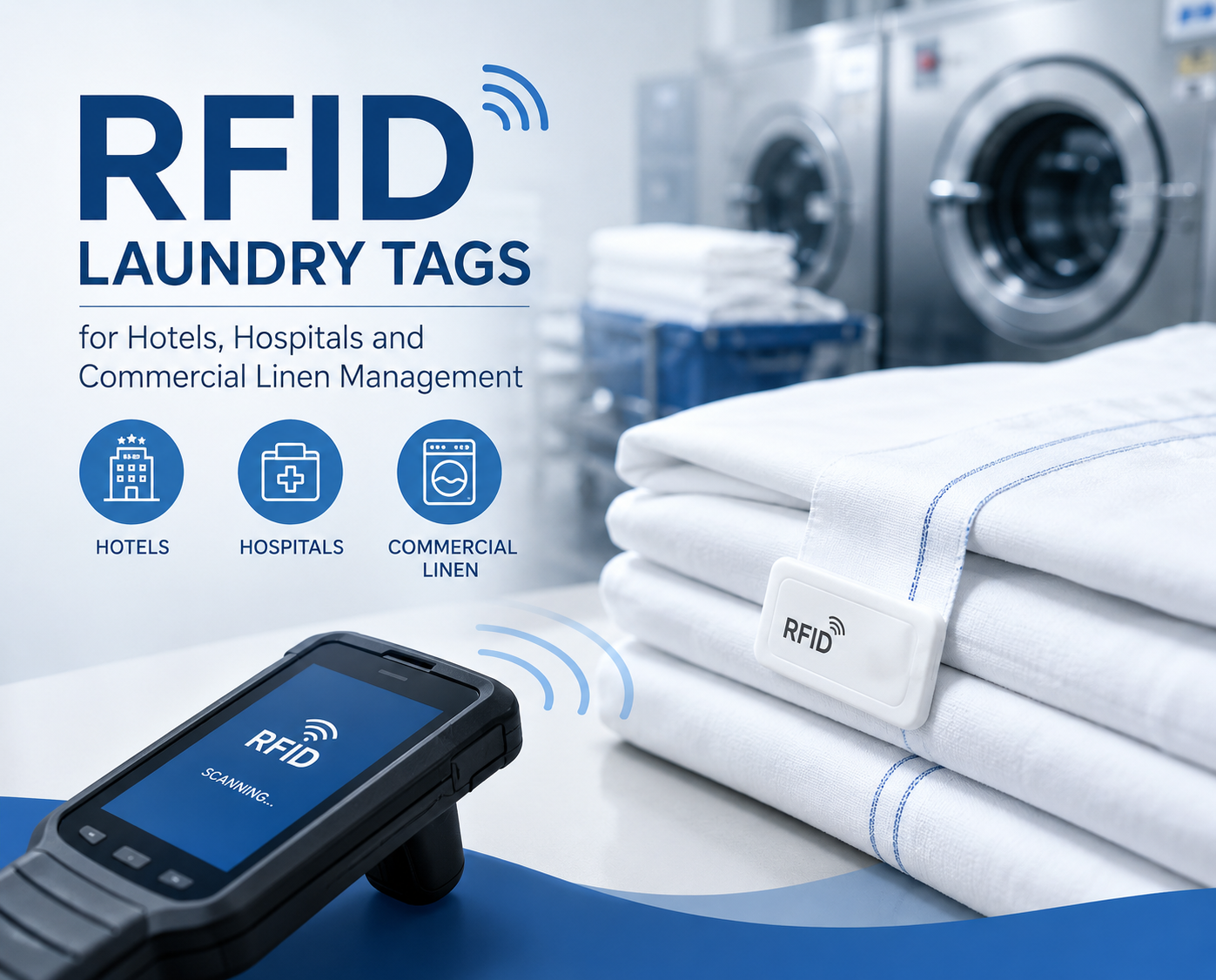
**RFID laundry tags** provide a more reliable way to identify and track textile items throughout their entire service life. These washable RFID tags can be sewn, heat-sealed, or embedded into fabric items, allowing businesses to scan and manage large batches of textiles quickly.
For B2B buyers, RFID laundry tags are not just small accessories. They are the foundation of a smarter linen management system.
RFID laundry tags are durable RFID transponders designed for textile and laundry environments. They are made to withstand washing, drying, ironing, pressure, moisture, detergent, and repeated handling.
Depending on the application, they may be used for:
· Hotel bedsheets, towels, bathrobes, and uniforms.
· Hospital linens, gowns, patient garments, and staff uniforms.
· Restaurant and spa textiles.
· Industrial workwear and rental garments.
· Commercial laundry sorting and delivery operations.
Each tag carries a unique ID, making every textile item individually traceable.
Linen loss can quietly increase operating cost. RFID laundry tags allow each item to be recorded, counted, and tracked across departments, rooms, laundry facilities, and delivery routes. This helps identify where items are lost and improves accountability.
Manual counting is slow and often inaccurate. With RFID, staff can scan multiple linens in bulk, reducing labor time during collection, washing, sorting, packing, and delivery.
Each tagged textile can be linked to washing history, usage frequency, and service life. This helps businesses know when items should be replaced, which batches have been processed, and whether cleaning procedures are being followed.
Hotels and hospitals need the right number of clean textiles available at the right time. RFID laundry management gives purchasing and operations teams better visibility into stock levels, usage rates, and replacement needs.
Clean, available, and properly managed linens directly affect guest satisfaction and healthcare service quality. RFID helps reduce missing items, delayed linen returns, and emergency replenishment.
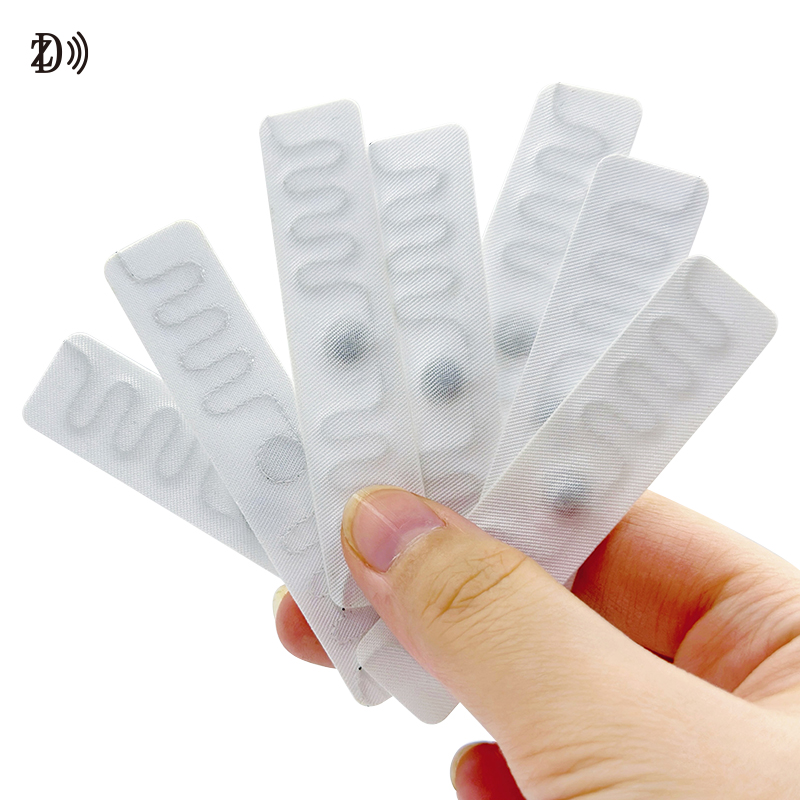
RFID laundry tags can be customized according to the textile type and operating environment.
Common options include:
· **Sew-in RFID laundry tags:** suitable for uniforms, towels, and reusable textiles.
· **Heat-seal RFID laundry tags:** suitable for garments and flat linens when sewing is not preferred.
· **Flexible textile RFID tags:** designed for comfort and repeated bending.
· **High-temperature resistant tags:** suitable for demanding washing and drying processes.
The best format depends on washing temperature, attachment method, textile thickness, read range, and expected service life.
Hotels use RFID laundry tags to track bedsheets, pillowcases, towels, bathrobes, banquet linens, and staff uniforms. RFID helps reduce linen loss and makes room supply planning more accurate.
Hospitals and clinics use RFID laundry tags for patient gowns, surgical textiles, staff uniforms, bed linens, and reusable medical textiles. The technology supports traceability, hygiene management, and inventory control.
Laundry service providers use RFID to identify customer-owned items, automate sorting, reduce disputes, and improve delivery accuracy. Tagged textiles can be scanned during intake, washing, packing, and dispatch.
Uniform rental companies use RFID laundry tags to manage issue, return, washing cycles, repair, and replacement. This helps improve asset utilization and customer billing accuracy.
Before ordering, buyers should confirm:
· Textile type and attachment method.
· Washing and drying temperature.
· Chemical exposure.
· Required read distance.
· Expected washing cycle durability.
· Tag size and comfort requirements.
· Chip type and memory needs.
· Encoding, printing, or numbering requirements.
Testing samples in the real laundry process is strongly recommended before bulk production.
Different textile environments require different RFID tag designs. A hotel towel, a hospital gown, and an industrial uniform may need different tag sizes, materials, and attachment methods.
· Custom RFID laundry tags for linen and garment tracking.
· Multiple tag sizes and materials.
· Encoding, numbering, and logo customization.
· Sample testing support.
· Bulk production for hotels, hospitals, laundries, and uniform rental companies.
Can RFID laundry tags survive washing?
Yes. RFID laundry tags are designed for repeated washing and drying cycles, but durability depends on tag type, washing conditions, and attachment method.
Can laundry tags be sewn into textiles?
Yes. Sew-in RFID laundry tags are commonly used for linens, uniforms, towels, and garments.
Are RFID laundry tags suitable for hospitals?
Yes. They are widely used for hospital linen and garment tracking, especially where traceability, sorting accuracy, and inventory control are important.
Can RFID laundry tags be customized?
Yes. Options may include size, frequency, chip type, encoding, printing, numbering, and packaging.
Need RFID laundry tags for hotel linen, hospital textiles, or commercial laundry operations? Contact us for samples and a customized RFID textile tracking solution.
Do you need a professional team to provide you with solutions? Contact us for a quote
Let us discuss it with you.


 Tel: +86-755-23080267
 Email: sales1@zd-technology.com
Add: A316,building A, Huayuan Technology And Innovation Park, Baoyuan Road
Copyright © 2024 Shenzhen ZD Technology Co., Ltd., All rights reserved.
Designed by 

