
To solve these inefficiencies, many businesses are turning to Radio Frequency Identification (RFID). Unlike barcodes, which require a direct line-of-sight to scan, RFID allows for bulk reading from a distance. This shift from manual to digital tracking helps companies reduce downtime and ensures that critical equipment is always exactly where it needs to be.
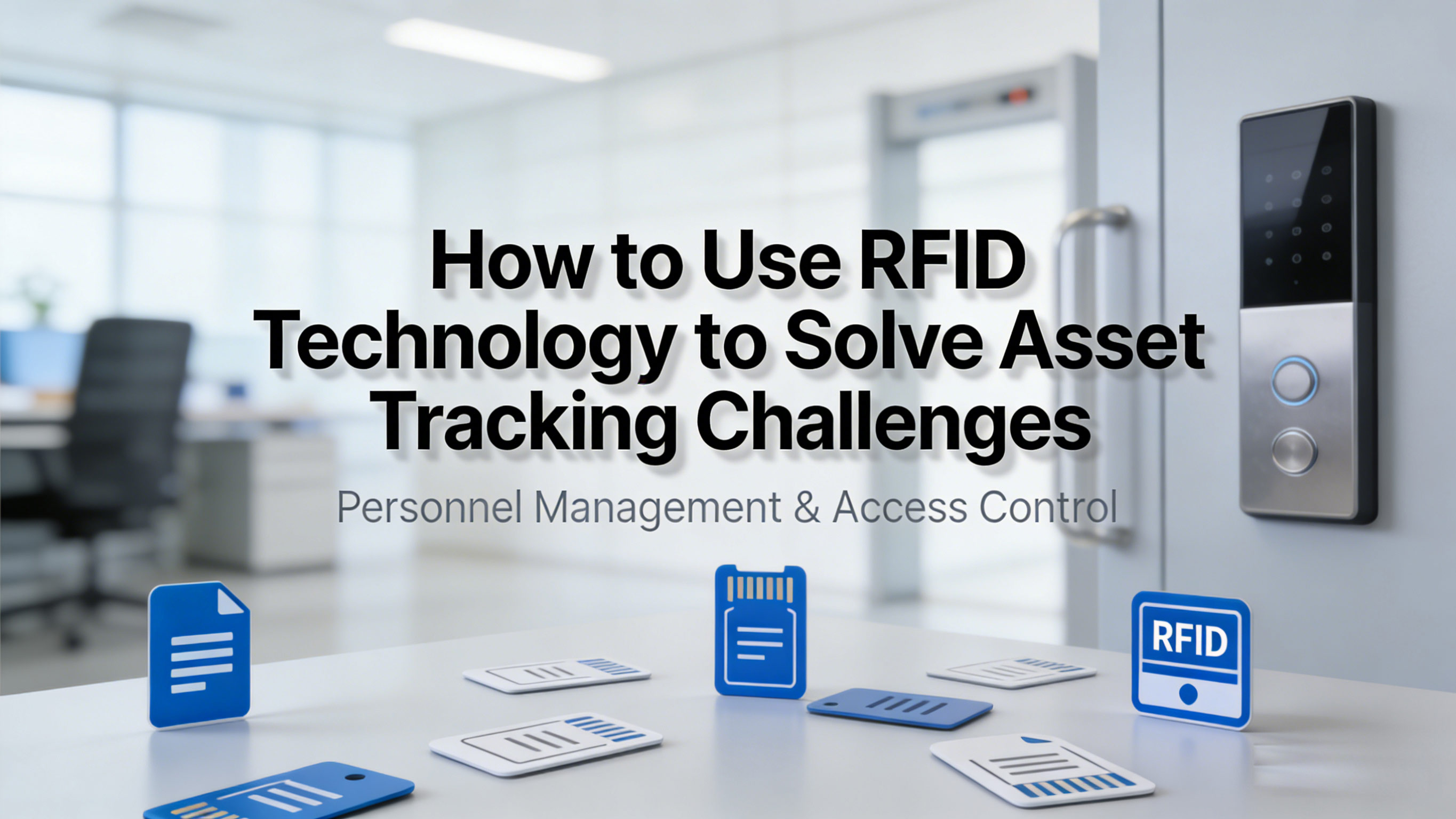
Before diving into specific applications, it is helpful to understand the basic mechanics of an RFID system. At its core, the technology consists of three parts: a tag (which holds data), a reader (which captures the data), and a software system (which processes the information).
While there are many complex variations, the industry standard for asset tracking is Passive UHF RFID. These tags do not have an internal battery; instead, they are powered by the energy sent from the reader. This makes them incredibly cost-effective, lightweight, and maintenance-free. Because we have been producing these solutions since 2000, we have seen firsthand how the right antenna design can ensure a stable signal even in busy warehouse environments.
One of the biggest hurdles in asset management is the sheer volume of items that need to be counted. In industries like retail or apparel manufacturing, counting individual items by hand can take days and still yield inaccurate results.
This is where RFID Garment Tags and Inlays become essential. By embedding a small RFID inlay into a clothing label or a hangtag, staff can scan entire boxes of inventory in seconds using a handheld or fixed reader. This technology transforms inventory from a "once-a-month" chore into a real-time data stream. For businesses managing large-scale orders, this level of stability ensures that shipping errors are caught before the product ever leaves the loading dock.
Asset tracking is not just about the equipment; it is also about the people who interact with those assets. In a secure facility, knowing who accessed a specific room or who checked out a high-value tool is vital for accountability.
To bridge this gap, RFID Wristbands and RFID Cards are used as digital keys. Because we began our journey over 20 years ago as a factory producing plastic cards, we understand the importance of durability in these products. Whether it is a waterproof silicone wristband for a worker or a high-frequency (HF) card for office access, these tools ensure that your personnel management is as automated and secure as your inventory tracking.

When implementing an RFID system, the most common mistake is choosing the cheapest possible tag without considering long-term performance. If a tag fails to read, the entire tracking system breaks down. This is why stability is the most important metric in the industry.
With over 20 years of experience, we focus on providing bulk orders that maintain a consistent read range from the first tag to the last. Our 50% repurchase rate is a testament to this philosophy. We believe that RFID will remain the most important management method for the next hundred years, provided the hardware is built to last.
Navigating the world of RFID can be complex, but you don't have to do it alone. Whether you need high-performance RFID Inlays, durable RFID Wristbands, or custom RFID Garment Tags, our engineering team is here to provide stable, factory-direct solutions.
Would you like to optimize your asset tracking today? Contact ZD Technology for a professional consultation or to request samples for your next project. Let our 20 years of expertise help you build a system that lasts.
Do you need a professional team to provide you with solutions? Contact us for a quote
Let us discuss it with you.


 Tel: +86-755-23080267
 Email: sales1@zd-technology.com
Add: A316,building A, Huayuan Technology And Innovation Park, Baoyuan Road
Copyright © 2024 Shenzhen ZD Technology Co., Ltd., All rights reserved.
Designed by 

